

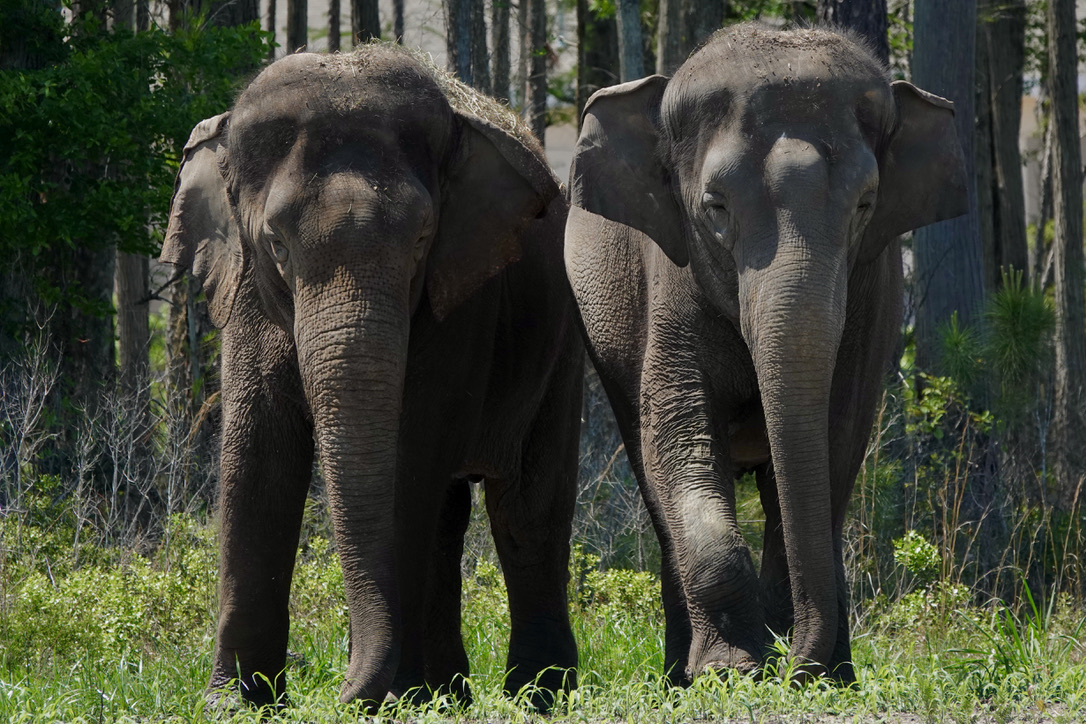
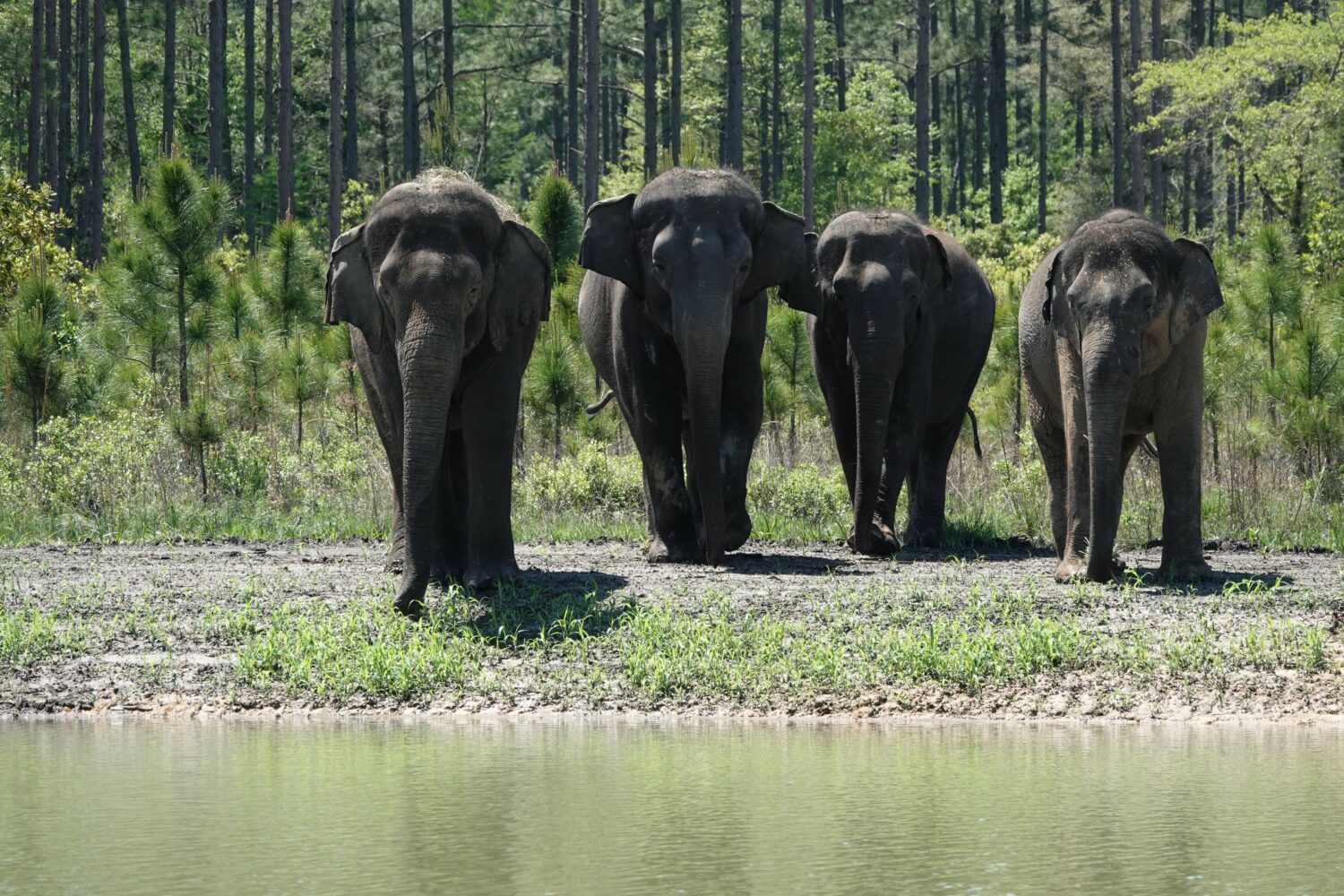
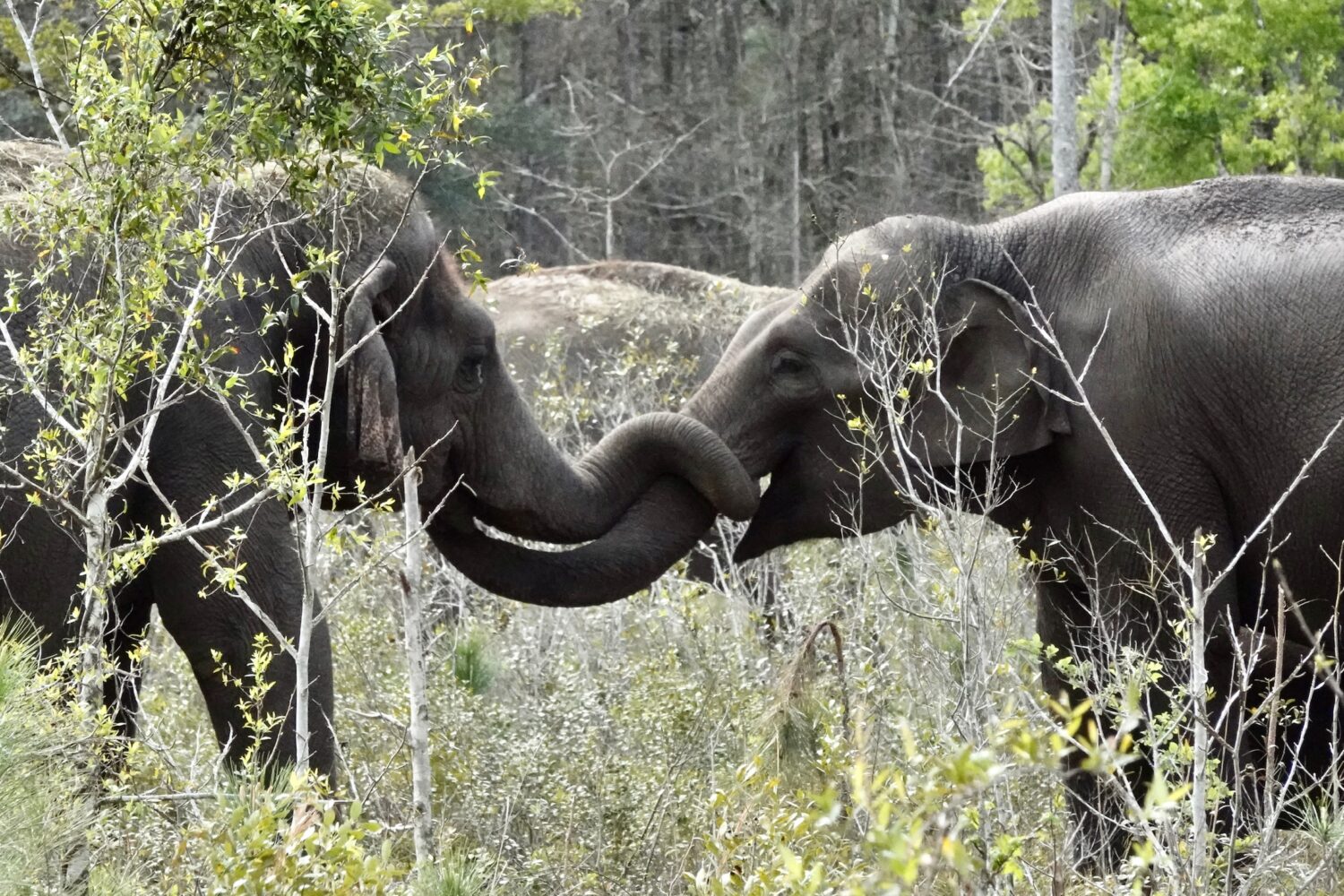
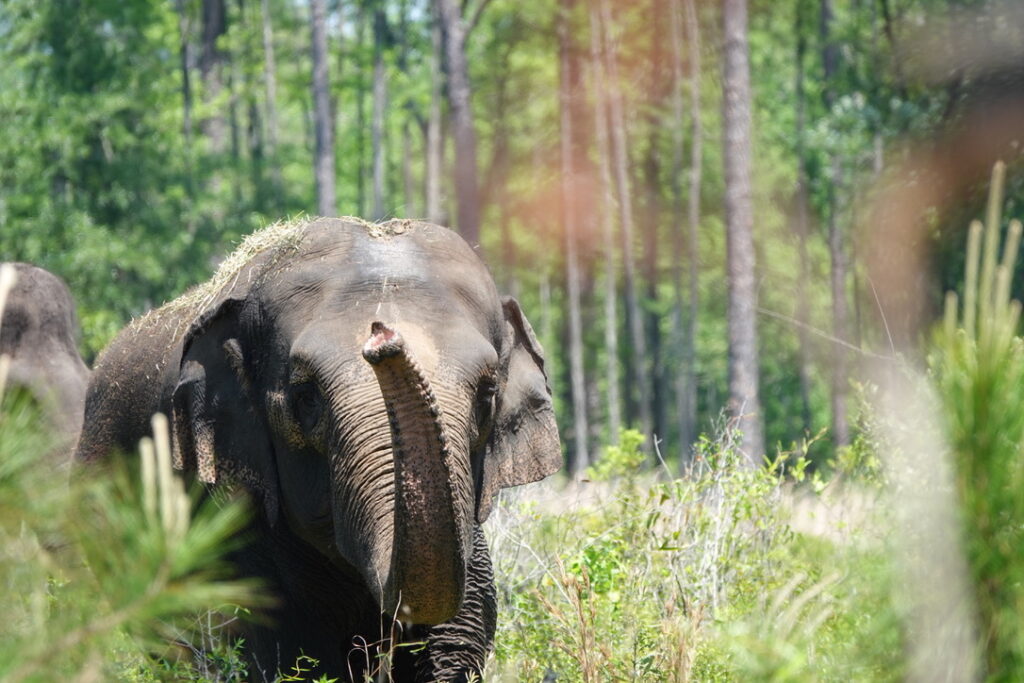
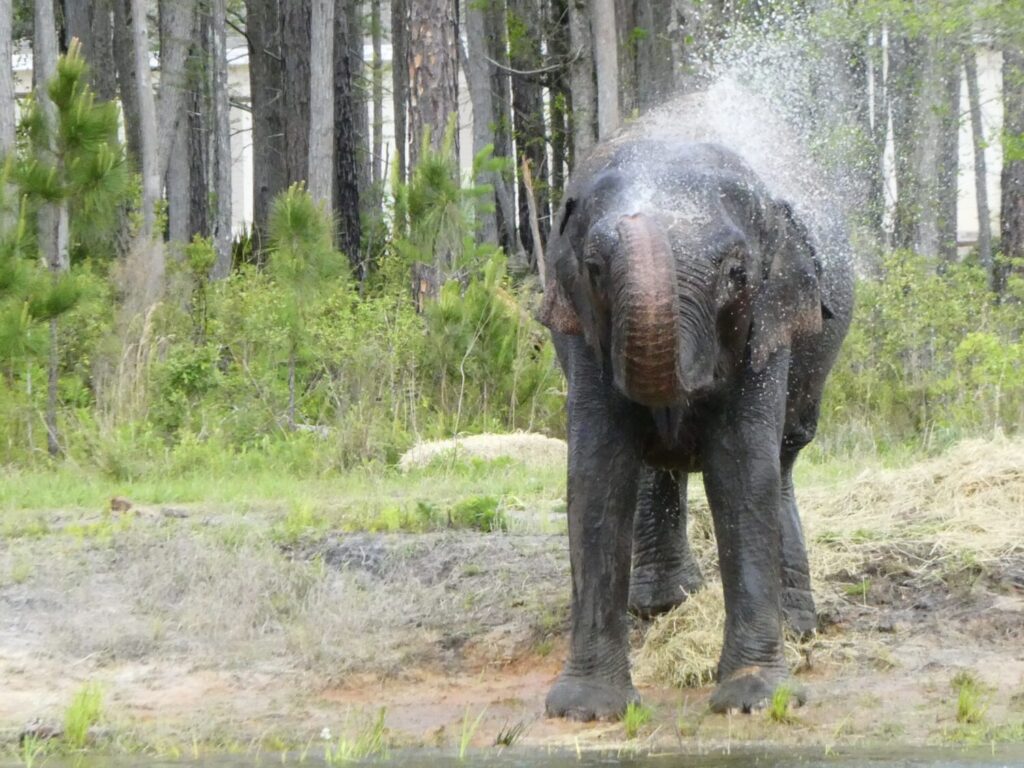
Asian elephants are the largest living land mammal in Asia and the second-largest in the world behind African elephants. On average, males stand 9 ft. tall at the shoulder and weigh up to 12,000 lbs. Unlike African elephants, only male Asian elephants have tusks. Besides their tusks, elephants are distinctive due to their trunks. The trunk is an elongation of the nose and upper lip combined, with the nostrils at the tip. The trunk contains as many as 60,000 muscles, and in the case of Asian elephants, there is one finger-like projection at the end of it. Elephants use their trunks for breathing, watering, feeding, touching, dusting, washing, grasping, sound production and communication, and playing.
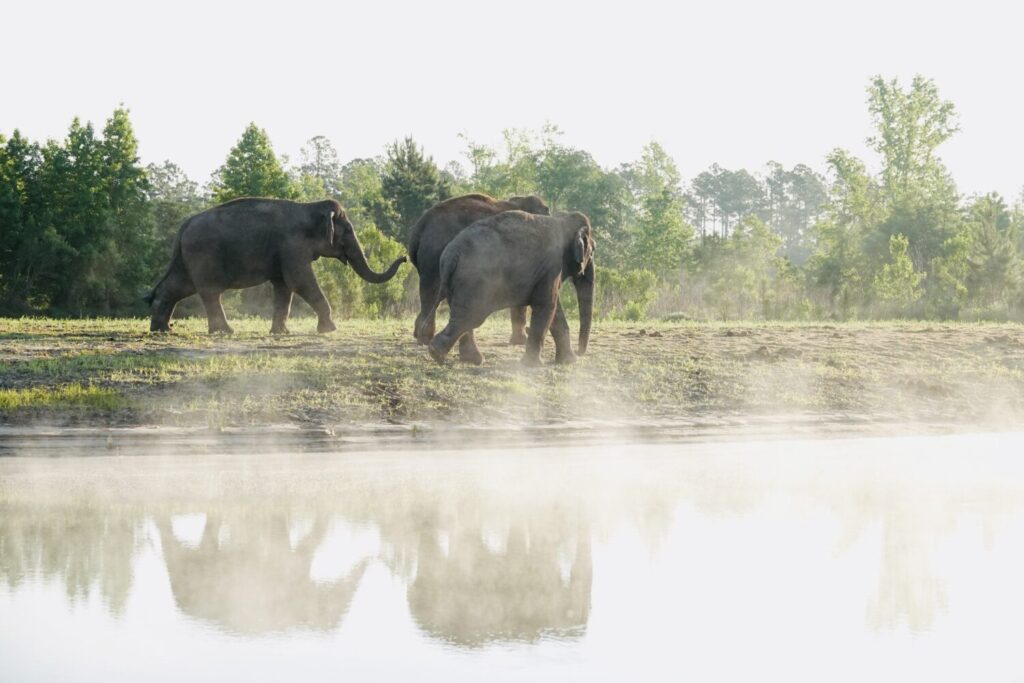
It is estimated that between 30,000 and 50,000 Asian elephants are in the wild, down from an estimated 100,000 at the beginning of the 20th Century. They range throughout 13 different countries in South and Southeast Asia. In many countries, the population is currently stable, but there have been drastic declines in Vietnam and Sumatra.
According to the Asian Elephant Specialist Group, the major threats to Asian elephants continue to be habitat loss and fragmentation, human-elephant conflict, and poaching and illegal trade of elephants.
Loss and fragmentation of habitat are the most important factors impacting elephant populations in most range countries in Asia. The rapid change in land use across range states has resulted in the shrinkage and fragmentation of habitat, and with a growing human population, elephants are being pushed into smaller areas of forest that are surrounded by humans. This has increased human-elephant conflict, resulting in the retaliatory deaths of elephants over the destruction of crops and even from elephants being hit by motorized vehicles.
Poaching was once considered a minor threat to Asian elephants, but its significance has increased in recent years. Some bull Asian elephants can grow tusks comparable to their African counterparts, making them the target for poachers who hunt them for their ivory, as well as their skin and meat. Wide-scale hunting of elephants for these products has significantly reduced the number of elephants over a wide area from Myanmar, Vietnam, to Indonesia. The trade of skin is especially concerning as it impacts the population of both male and female elephants. It is used to produce beads, pendants, skin pieces, and powder, and is sold throughout Myanmar, Laos, and China.
In situ elephant conservation (occurring within the elephants’ natural habitat) has its challenges. Some of the concern includes lack of a reliable method for population estimation, a lack of specific elephant conservation/management policies in most range states, and a lack of viable and well-tested solutions specifically on mitigating human-elephant conflict. Transboundary cooperation between countries and limited resources make it challenging to undertake the conservation efforts necessary to protect the elephants and their habitats. However, international efforts are in place to conserve Asian elephants.
We are excited to be a part of conserving this iconic species at White Oak.